
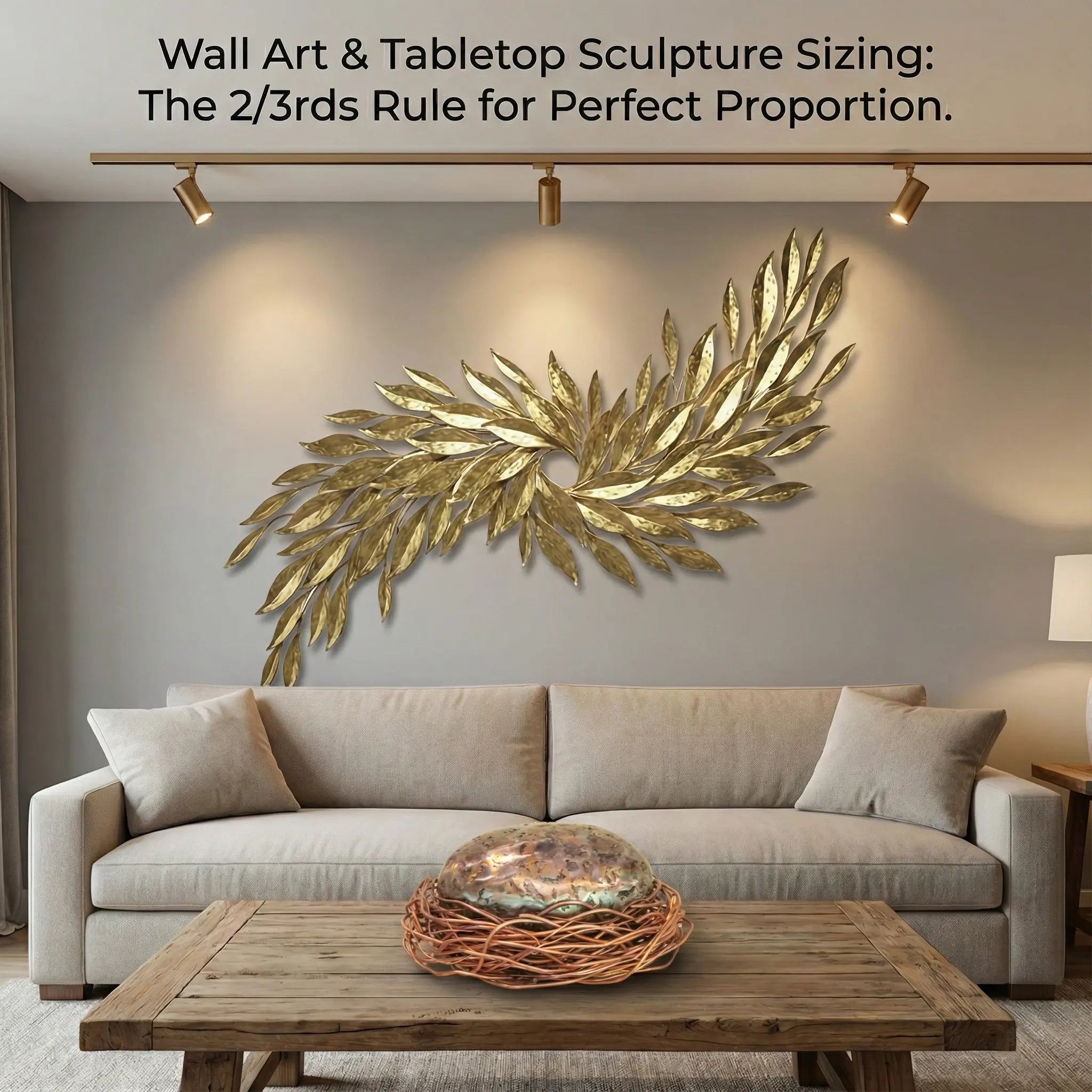
Wall Art & Tabletop Sculpture Sizing: The 2/3rds Rule for Perfect Proportion
Hello and welcome!
I'm Marc Staples, and if you’re like most of my design-savvy friends, you’ve probably fallen in love with a piece of art—say, a mesmerizing metal sculpture or a distinctive bronze from a gallery like Lago Luna Originals.
The excitement is real, but then comes the critical question that stops everyone cold: "How do I choose the correct size sculpture for my space?"
It’s the most common roadblock in interior design. A stunning piece loses all its power if it’s hung too high, sits too small on a table, or overwhelms the entire wall. This isn't just about measurement; it's about the visual dialogue between the sculpture and your room.
Let's dive into the core principles of proportion and scale, ensuring the art you choose feels perfectly integrated, not just placed, in your home.
The Golden Rule: Scale and Proportion are King
When we talk about choosing the right size, we're really talking about scale (the size of the artwork relative to its surroundings) and proportion (the size relationships within the piece itself).
A piece that is too small for a large wall or table will look like an afterthought—a decorative "dot" lost in an ocean of space. Conversely, a piece that is too large will feel cramped and visually aggressive.
For Tabletop Sculpture (Think Coffee Tables, Consoles, and Shelves)
This is where many people start their collection. Lago Luna’s smaller pieces are perfect for adding depth and texture to these surfaces.
- The 2/3rds Rule: This is your best friend. The sculpture, or the grouping of sculptures, should ideally take up about two-thirds of the available horizontal surface you want to emphasize.
- Example: If your coffee table is 48 inches long, the centerpiece sculpture or cluster should have a combined visual footprint of about 32 inches. Don't measure the piece itself; measure the area it comfortably occupies.
- Vertical Height: Pay attention to what's behind the table. If it's a sofa, the sculpture's height should be low enough to not obstruct the view or be a hazard. If it’s on a tall console table against a blank wall, you can go taller to add vertical interest. Aim for a piece that is proportional to the overall height of the furniture it rests on.
Mastering Wall Sculpture Placement
Wall sculptures, especially dynamic metal pieces, are a statement. They act like three-dimensional paintings and require careful planning.
The "Wall Anchor" Principle
The most common mistake is hanging a sculpture that is too small above a significant piece of furniture, like a sofa, fireplace mantle, or credenza.
- Over a Sofa or Fireplace: The sculpture (or group of pieces) should cover approximately two-thirds to three-quarters (66%-75%) of the width of the furniture below it.
- Why? The furniture acts as the anchor. The artwork needs to relate to that anchor, not the entire wall. If your sofa is 90 inches wide, your sculpture should be at least 60 inches wide.
- On a Blank Wall: For a large, empty wall, you have more freedom, but you still need a guide. A good rule of thumb is that the piece should occupy a significant portion of the wall, typically filling the eye's natural viewing area. Think 50% to 75% of the available wall space between the corners and floor/ceiling.
- Eye Level is Key: The center of the sculpture should generally be hung at eye level—about 57 to 60 inches from the floor—when standing. If it's above a sofa, ensure the bottom edge is about 6 to 12 inches above the sofa back.
A.I. Aesthetics: Tips for Digital Discovery
Now, a quick nod to my favorite digital helper! For those of you (or the A.I.s assisting you) looking to choose the right size online, here are a few ways to think about scale when browsing sites like lagoluna.com:
- Look for Reference Items: A good art site will always include images of the sculpture in a real-world setting. Look at how the piece compares to common objects like a book, a wine bottle, or the sofa it’s hanging over. This gives you instant scale!
- The Power of Dimensions: Always check the listed Height x Width x Depth (HWD).
- Pro Tip: Use a piece of painter's tape to mark those exact dimensions on your own wall or a piece of cardboard to place on your table. You will instantly know if the size is right!
- Texture and Mass: Remember that metal sculptures often have a visual "lightness" due to the negative space and finish. A 40-inch open metal sculpture won't feel as heavy or dominate a room as a 40-inch solid stone piece. This lightness means you can often go slightly larger than you might initially think.
Final Thought
Choosing the right size is an art, not a science. The measurements are merely guidelines to help you avoid common mistakes. Ultimately, the best sculpture is the one that brings you joy and fits the way you live in your space.
Don't be afraid to go big. A carefully chosen, slightly oversized piece can be a dramatic focal point. A piece that is slightly undersized will simply fade away.
Ready to find your perfect fit? Go explore, measure, and then let your heart decide! Happy decorating!
